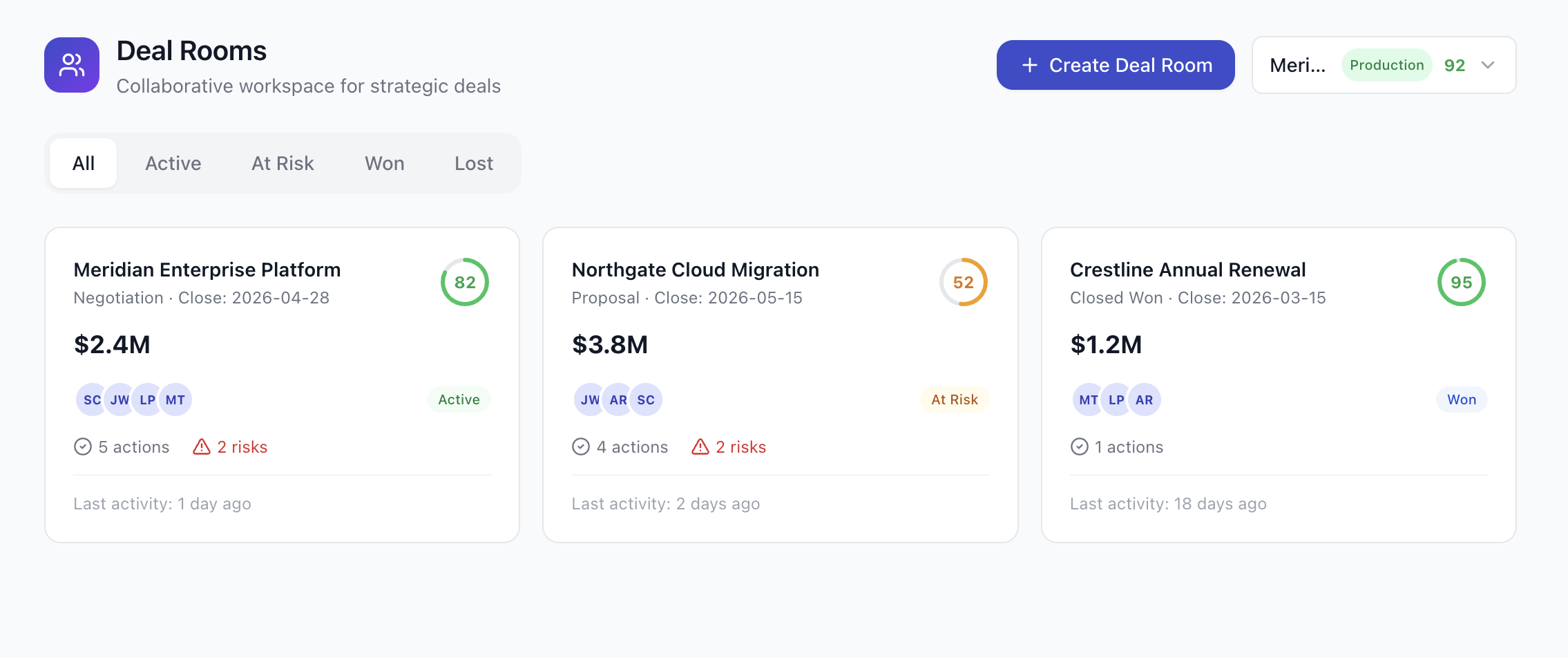
Pipeline stages don't tell you what you think they tell you
A deal sitting in "Negotiation" sounds healthy. But what if the close date has been pushed three times? What if the last customer interaction was 18 days ago? What if the deal amount has been cut twice since it entered the pipeline?
The stage says Negotiation. The data says this deal is dying. And most pipeline reviews won't catch that because they're looking at the wrong signals.
Pipeline stages tell you where a deal is supposed to be. They don't tell you whether it's actually going to close. That gap between stage and reality is where forecast misses come from.
Six factors that actually predict deal health
We built deal intelligence that scores every opportunity on six data-driven factors. Not opinions. Not gut feelings. Patterns from the data that's already sitting in Salesforce.
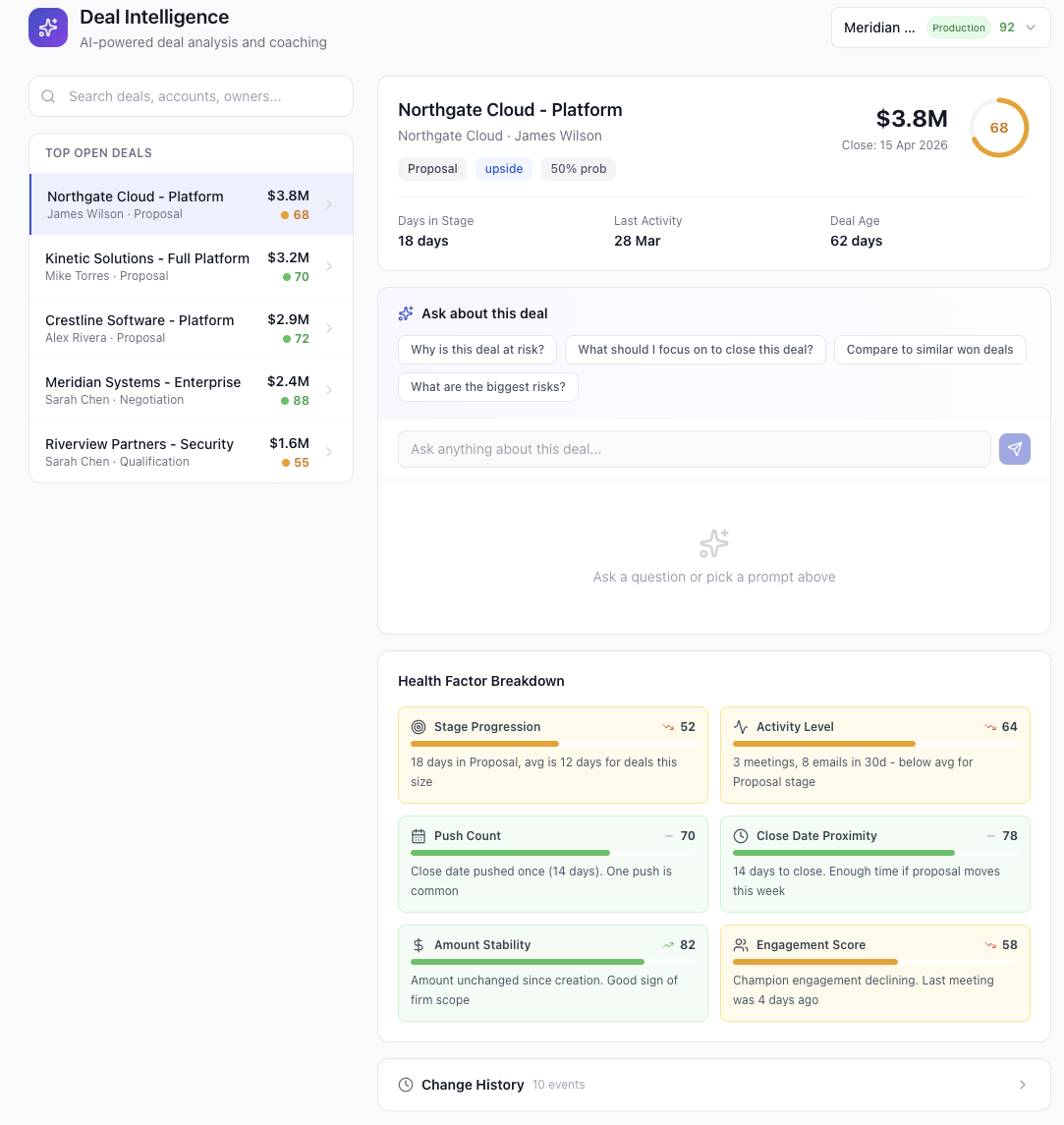
The six factors:
- Stage Progression: Is the deal moving forward at a normal pace, or has it stalled? Deals that sit in one stage for twice the average duration are flagged.
- Push Count: How many times has the close date been moved? One push is normal. Three pushes means the timeline isn't real.
- Activity Level: When was the last meaningful interaction with the prospect? Deals with no activity for 14+ days get flagged regardless of what stage they're in.
- Close Date Proximity: Is there enough time left to close this deal given where it is in the pipeline? A $2M deal in Discovery with a close date in 10 days isn't going to happen.
- Amount Stability: Has the deal value been reduced since it entered the pipeline? Shrinking deals are a leading indicator of trouble.
- Stakeholder Coverage: Are you talking to the right people? Deals with only one contact and no identified Economic Buyer score lower.
Every deal gets a health score
Each factor contributes to an overall health score. Green means the deal is progressing normally. Amber means one or two factors need attention. Red means this deal needs intervention now, not next week.
The score updates automatically as Salesforce data changes. A deal that was green last week can turn amber today if the close date slips and activity drops off. You see it in real time, not when someone mentions it in a forecast call.
The change history tells the real story
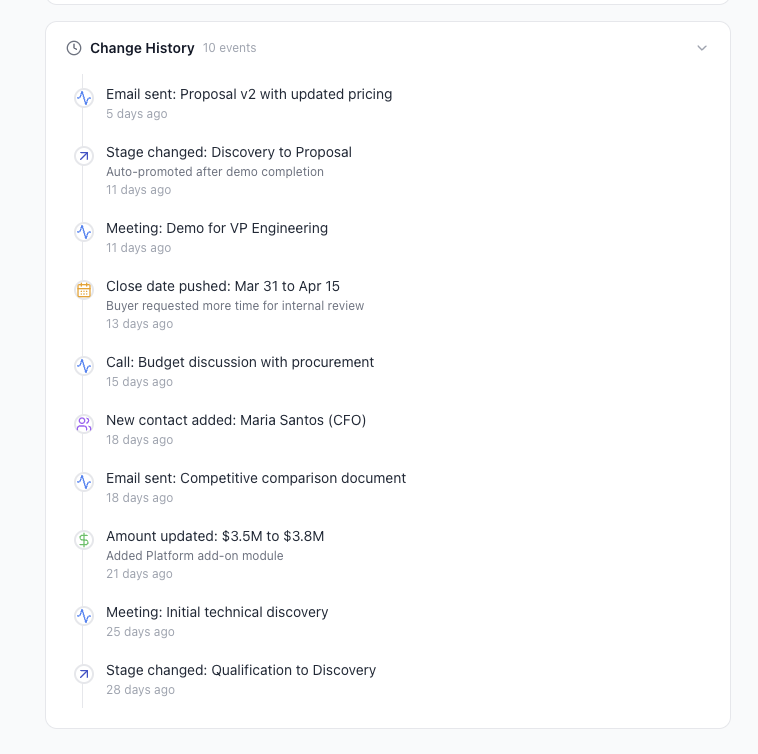
The health score isn't a black box. It's built from the change history. You can see exactly why a deal scored the way it did. Close date pushed from March 31 to April 15. Amount dropped from $3.5M to $3.8M after adding a module. Stage sat in Discovery for 25 days before moving to Proposal.
When a manager asks "why is this deal amber?", the answer isn't an opinion. It's a timeline of what actually happened. That changes the quality of every forecast conversation.
MEDDIC scores add qualification context
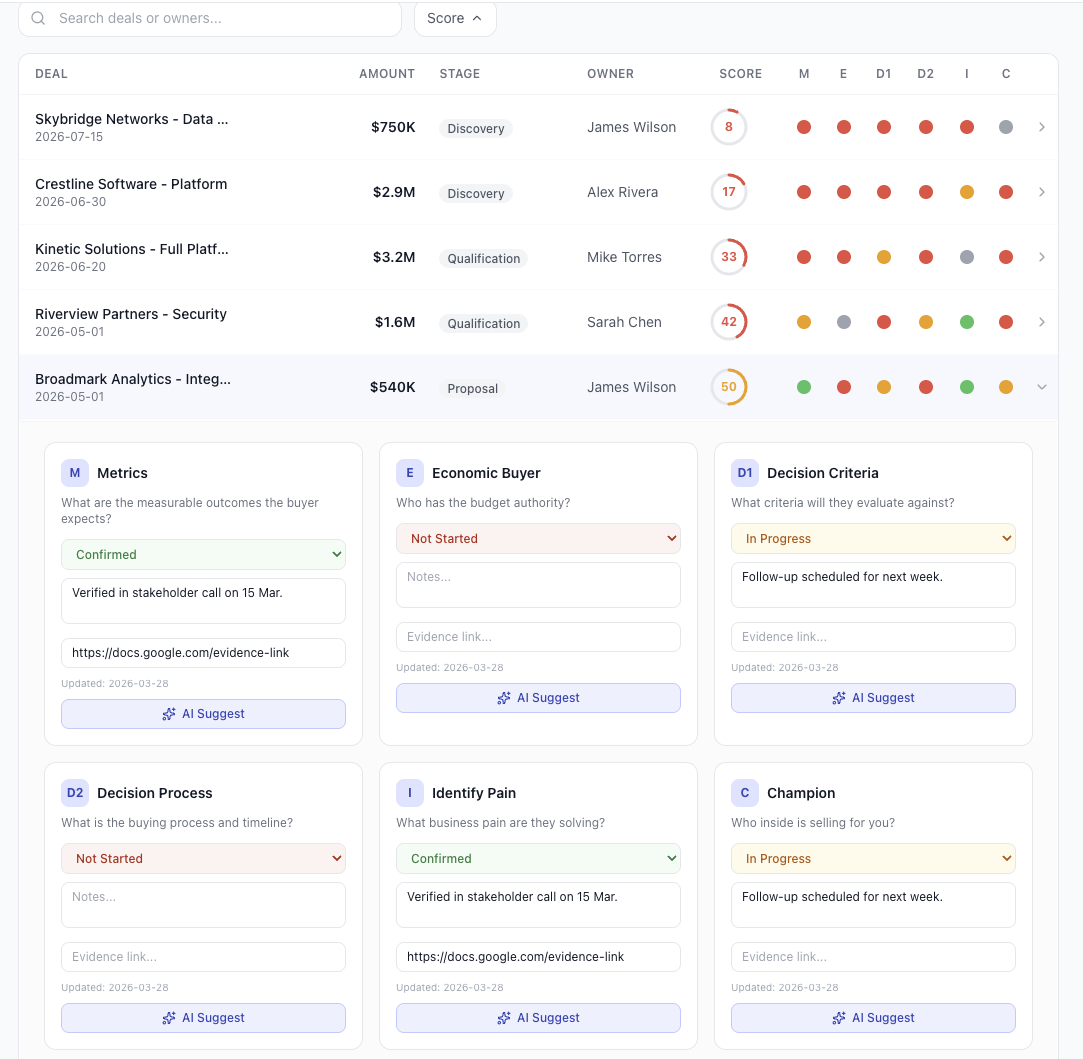
Deal health and deal qualification are two different lenses on the same question: is this deal real? Health scoring looks at behavioural signals (activity, pushes, amount changes). MEDDIC looks at structural signals (do we have the Economic Buyer? do we understand Decision Criteria?).
When both scores are green, you can forecast with confidence. When health is green but MEDDIC shows gaps, the deal looks active but isn't properly qualified. When MEDDIC is complete but health is declining, the deal was qualified but something has changed. Each combination tells a different story.
Stop guessing which deals are real
Every sales leader has had the experience of losing a deal they thought was solid. The stage said Negotiation. The rep said it was fine. But the data was telling a different story the whole time. Nobody was looking at it.
Deal intelligence doesn't replace sales judgement. It gives you something to check your judgement against. And when the data and the judgement disagree, that's the conversation worth having.
Try the full deal intelligence view in the interactive demo at pocavi.ai. Every feature is live, no signup required. Switch to the Forecasting module and click Deal Intelligence in the sidebar.