Built around the owner of the work
One Salesforce.
Many critical jobs.
POCAVI gives every owner the workflow they need, while keeping the org, change history, revenue context, and evidence connected.
Find your workflowFind yourself in one of these
Start from the problem you own.
Each route below is a real working rhythm, not a persona. Read the symptoms. If they sound like your week, that is your page.
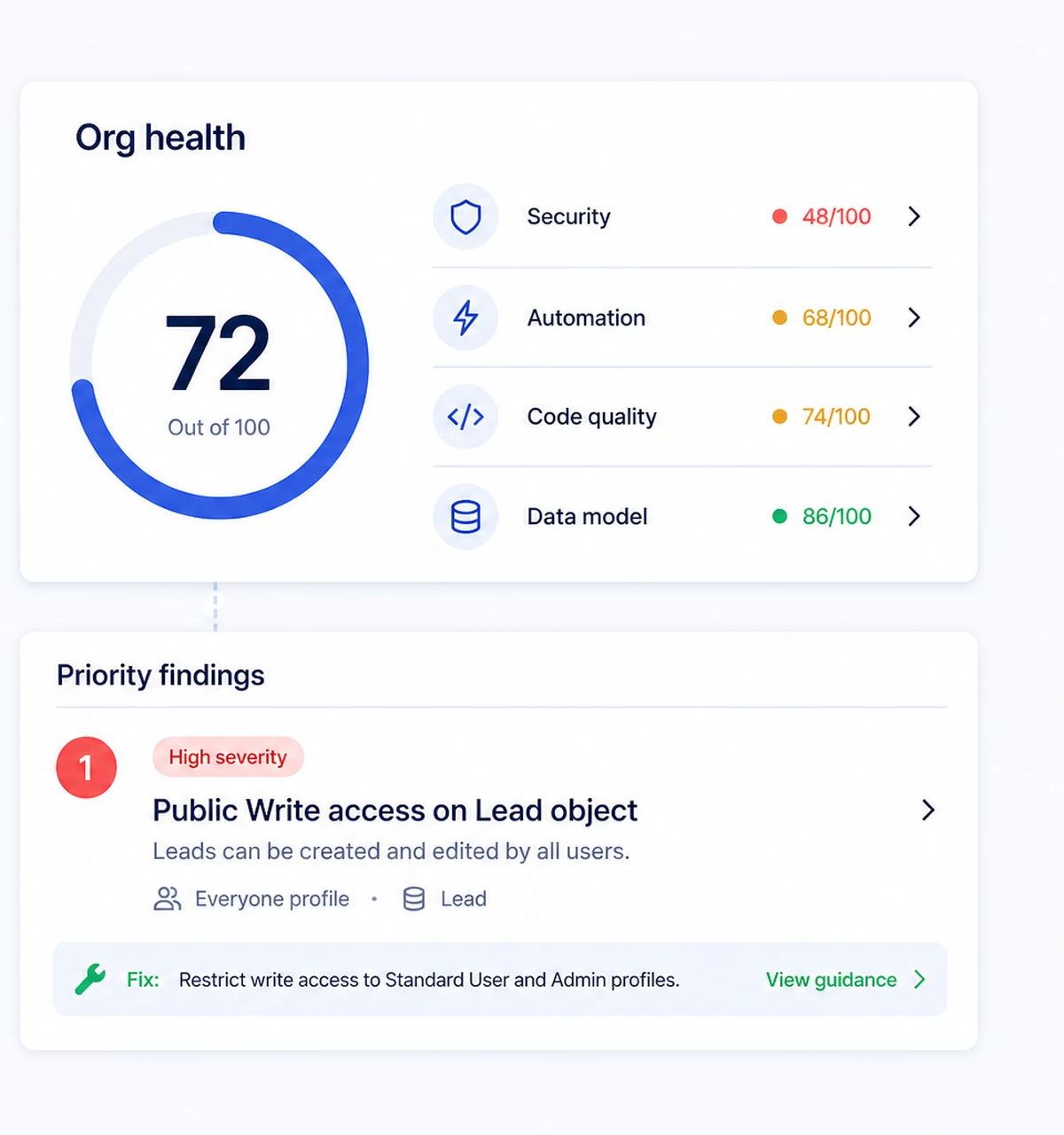
Salesforce admins
The org tells you what is wrong after it has gone wrong
Most admin work is reactive because the estate is only visible one screen at a time. The first sign of a problem is usually somebody else reporting it.
- A field is renamed and something downstream breaks in production.
- Permissions drift for months before anyone inspects them.
- A change is made on Friday and nobody can say what it replaced.
RevOps and sales leaders
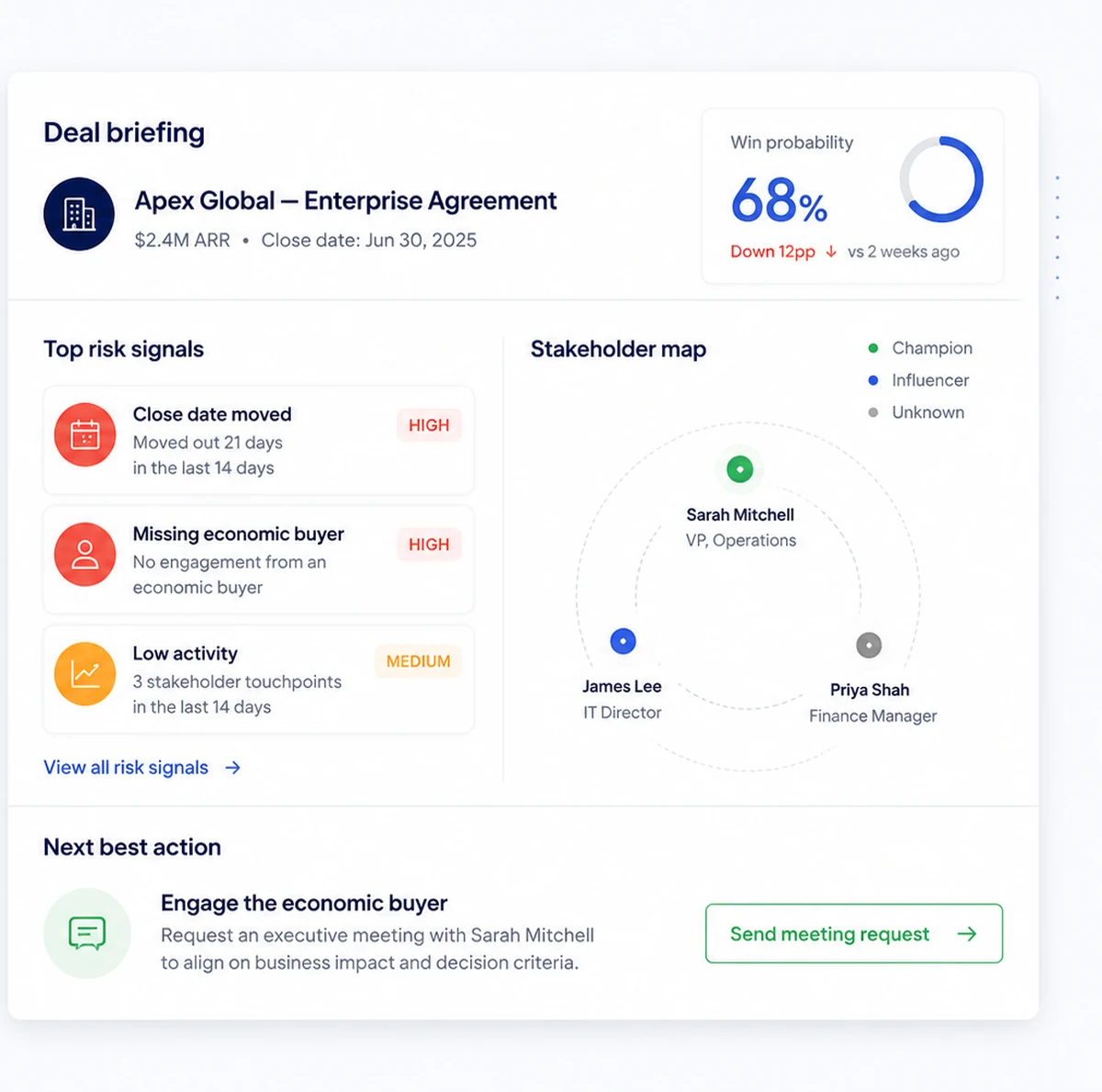
The number changed and nobody can say why
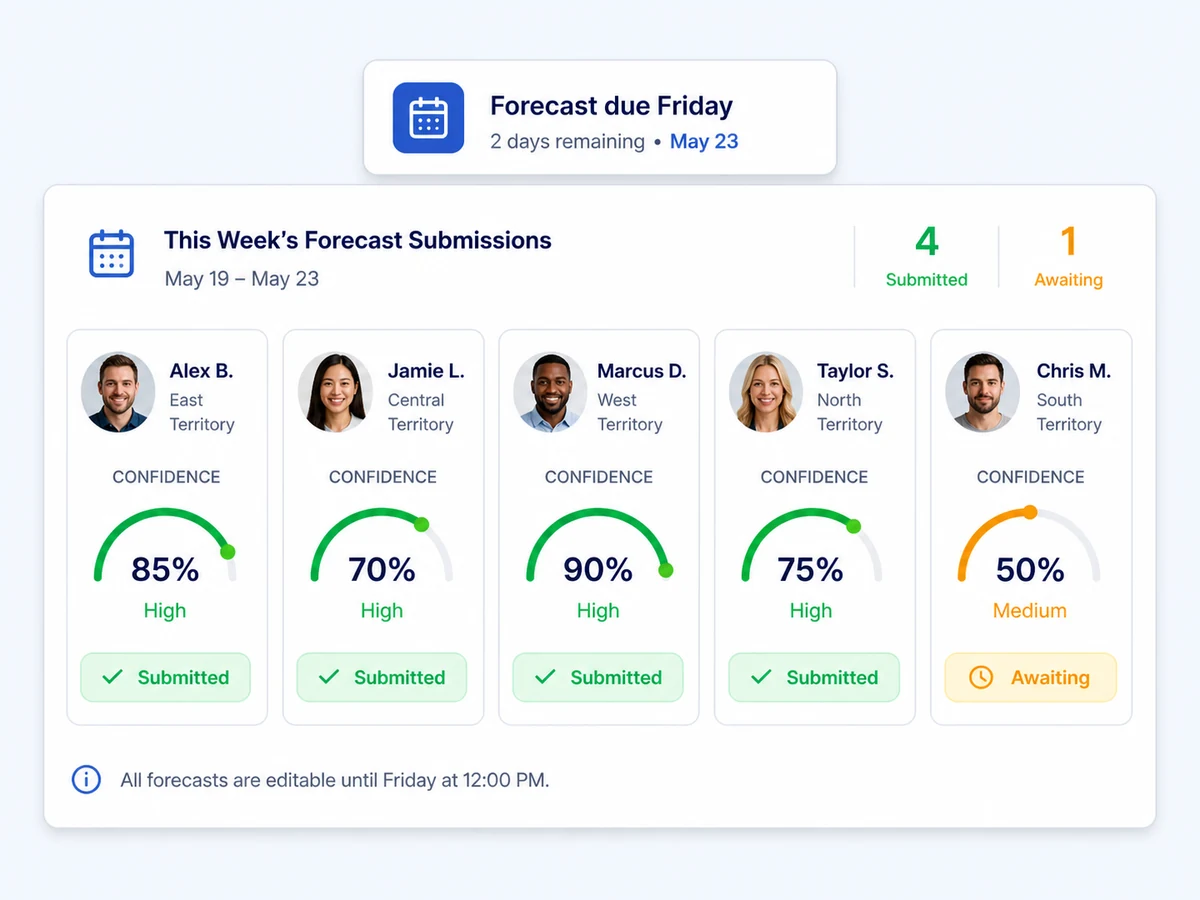
The forecast arrives as a total. Explaining the movement behind it means rebuilding last week from memory, a spreadsheet export, and whatever the reps remember.
- Pipeline moved and the reason is reconstructed after the fact.
- Deal risk is a feeling rather than a set of signals.
- Submissions are chased over Slack the morning of the call.
Delivery and release teams
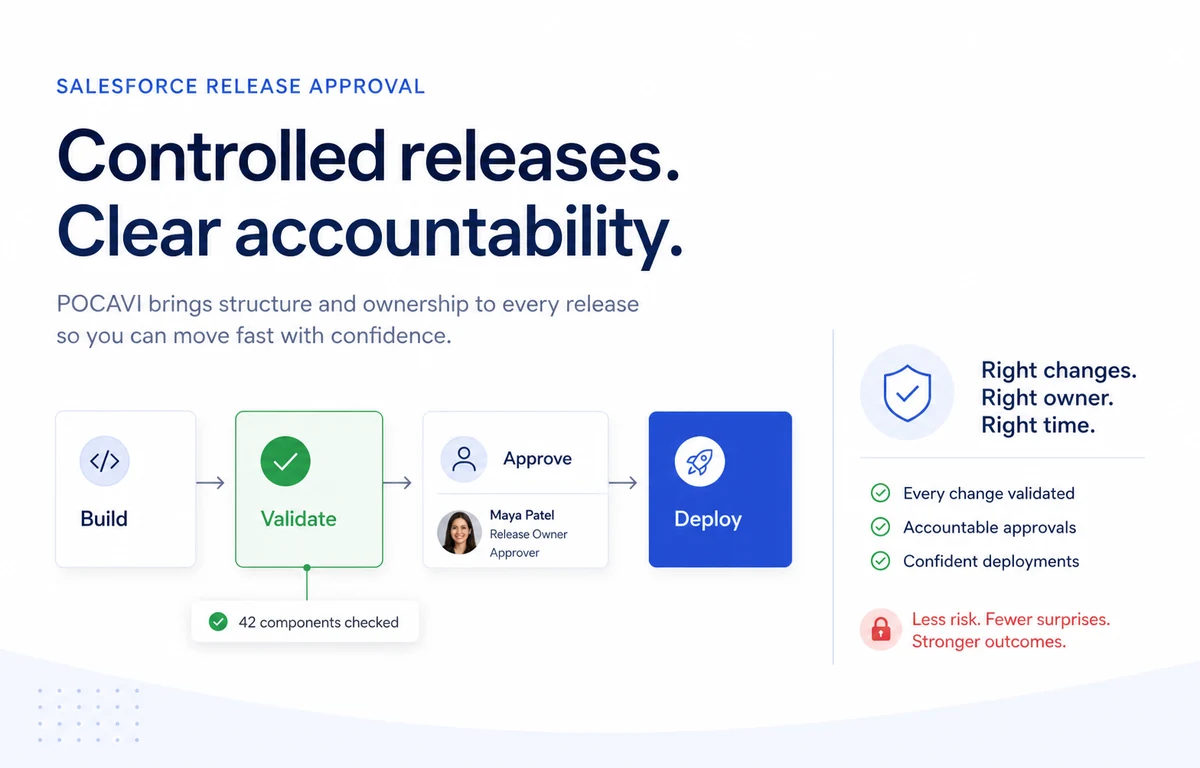
Releases work until the one that does not
Change sets carry no record of who approved what, validation happens after deployment rather than before it, and recovery is assembled under pressure instead of prepared in advance.
- Nobody can say which commit produced the change now in production.
- Approval happened in a thread that has since scrolled away.
- Two releases touch the same component and find out at deploy time.
Risk and privacy owners
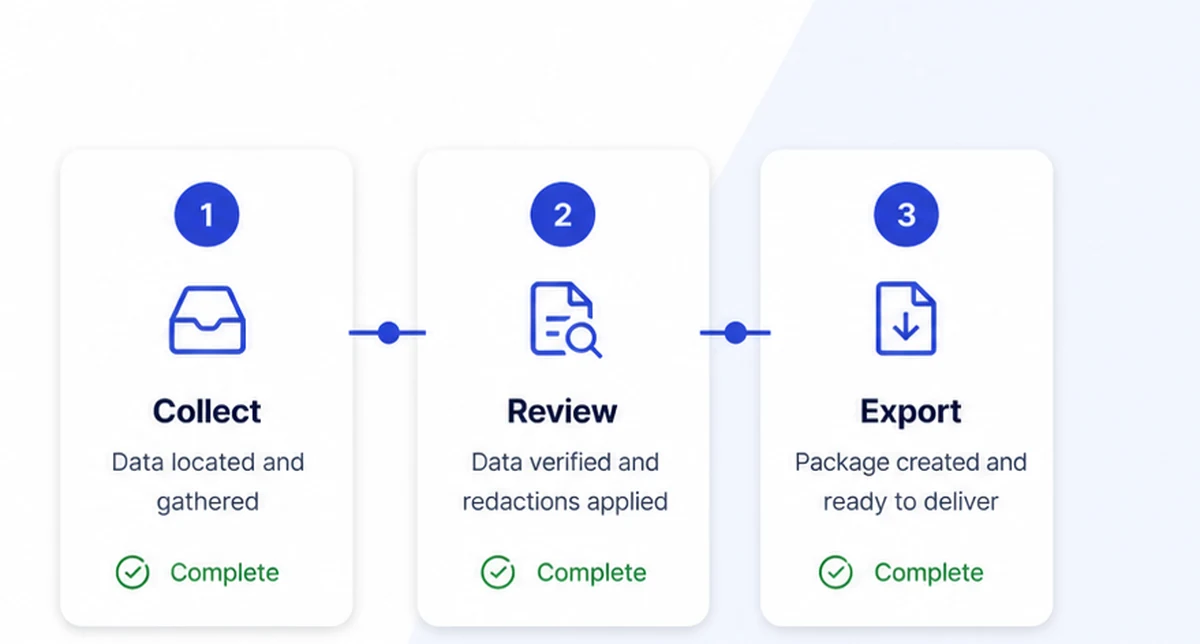
Every request starts from scratch
A subject access request means finding personal data across objects nobody has mapped, deciding what to redact, and then proving afterwards that it was all done properly.
- Personal data sits in custom objects and email records, not just Contact.
- A full-copy sandbox carries production PII to whoever has access.
- Erasure happens but the evidence is a screenshot in a folder.
Forecast leadership
The forecast call reviews the number instead of changing it
An hour spent reading a total aloud is an hour not spent on the deals that would move it. The call needs the movement, the risk, and a next action per deal.
- The call opens with a number nobody can decompose.
- Risk is raised by whoever remembers it, not by the data.
- Coaching happens on anecdote rather than on the last three deals.
If you own more than one of these
What each route actually gives you.
Small teams usually carry several of these jobs at once. The products are separate so you can buy the one that is breaking today, and they share the same org connection when you add another.
| If you own | The product | Capabilities | The first thing it answers |
|---|---|---|---|
| Org health and change | Admin | 24 | What in this org is going to break, and what fixes it |
| Releases and deployments | DevOps | 20 | What is in this release and what it will overwrite |
| The forecast and the pipeline | Forecast | 22 | Why the number moved, deal by deal |
| Privacy and audit | Compliance | 10 | Every place a person appears, and how to erase them |
One connected operating picture
Different teams. Shared context.
A forecast movement can lead to a delivery decision. A data request can expose a sandbox risk. POCAVI keeps the operational context close enough for teams to act without recreating it.
Explore the platform